

Polymarket archives nuclear market following backlash over war betting


Offshore prediction market Polymarket has quietly archived a longstanding contract that allowed users to wager on the likelihood of a nuclear weapon detonation within specific timeframes, removing the market from its platform amid mounting public and political scrutiny.
- Polymarket archived its nuclear detonation contract shortly after promoting updated odds on X, without issuing a detailed public explanation.
- Concerns are mounting that insiders with access to military or policy decisions could exploit prediction markets, particularly following heavy betting activity around recent Iran-related military developments.
- U.S. senators are increasing scrutiny of so-called “death-linked” and war-related markets, pressuring regulators to examine platforms such as Polymarket and Kalshi.
Polymarket’s nuclear bet sparks outcry
The move came hours after the company posted updated odds on X suggesting a roughly 22 % probability of nuclear detonation by year-end, drawing intense criticism across social media and from market analysts.
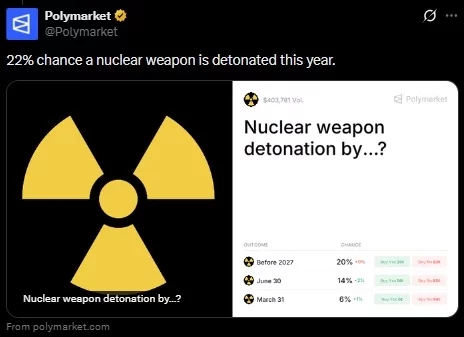
The nuclear detonation contract, which had been active for years and showed notable trading volumes, including more than $1.7 million in bets on a contract expiring in 2025, has disappeared from Polymarket’s listings without formal announcement.
The removal follows a broader surge in controversy surrounding Polymarket’s geopolitical markets, particularly those tied to the recent U.S. and Israeli military strikes on Iran.
During that crisis, more than $529 million in bets were placed on contracts related to the timing and outcomes of the attacks, dwarfing typical activity on the platform and fueling speculation about the ethical implications of wagering on war.
Analysts from blockchain surveillance firms flagged a series of newly created wallets that earned over $1 million by placing timely bets just hours before the strikes commenced, prompting accusations that insiders with advance information may be exploiting the unregulated markets.
Critics argue that prediction markets like Polymarket, which require only a crypto wallet and operate largely outside established financial regulations, create incentives for participants to profit from real-world conflicts and tragedies, raising both moral and legal questions.
The controversy has caught the attention of U.S. lawmakers, with several Senators urging regulatory action to curb markets tied to death, war, or high-stakes geopolitical events. Federal regulators, including the Commodity Futures Trading Commission, are advancing rulemaking aimed at clarifying how such platforms should be supervised.
Polymarket has not issued a public statement explaining the removal of the nuclear market or detailing wider changes to its listings. The platform’s response to criticism generally emphasizes the value of aggregated market insights, but the latest developments underscore intensifying pressure on prediction markets over ethics, transparency and potential insider exploitation.